 MEMBERSHIP LOGIN
 JOIN PRI
PRI Hall of Fame: John Kilroy
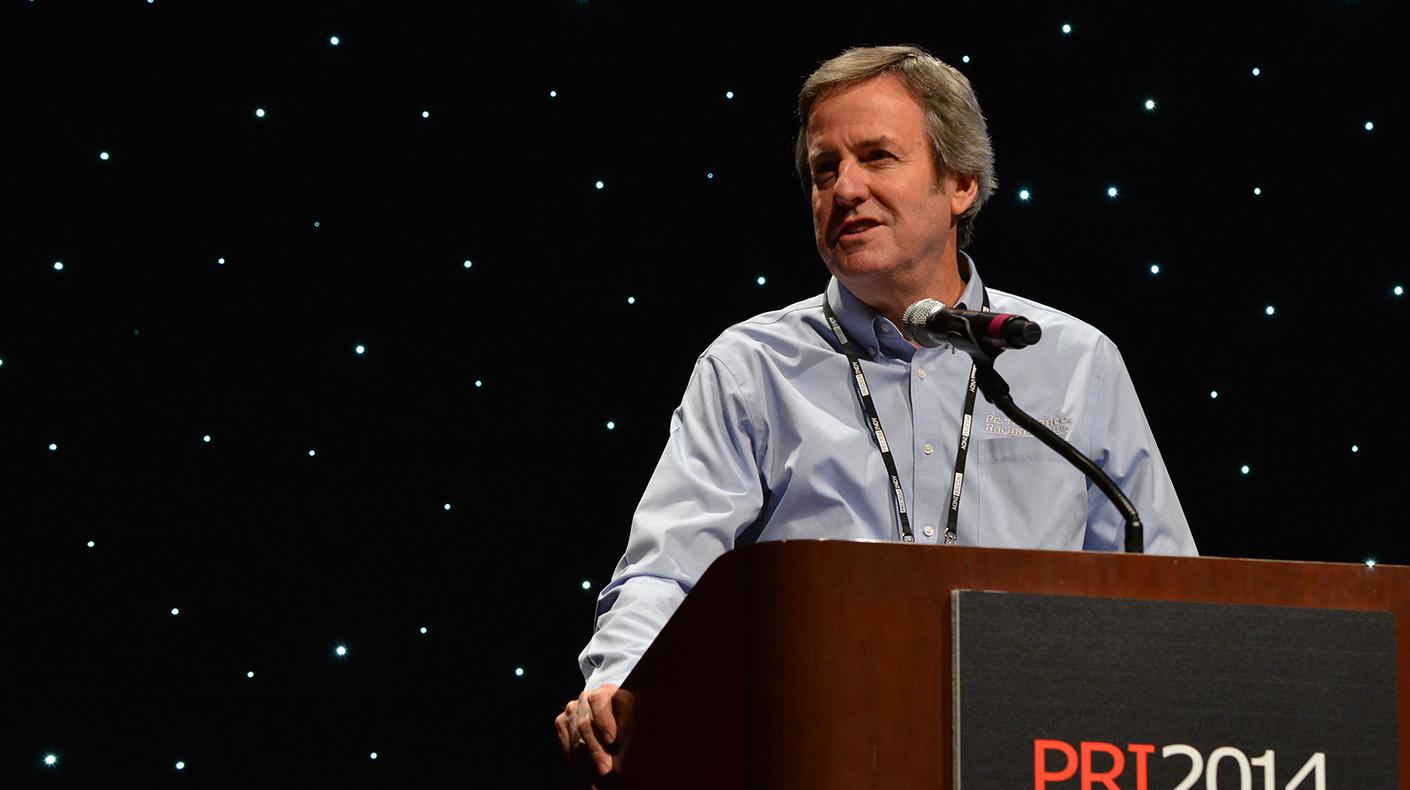
Motorsports legends fill a variety of halls of fame. However, the PRI Hall of Fame is a little bit different. All inductees have contributed greatly to motorsports, but these individuals have also highly impacted PRI in such ways that we owe tremendous gratitude to their accomplishments that excelled the brand to its place today. This second PRI Hall of Fame class consists of Scooter Brothers, Chris Raschke and John Kilroy.
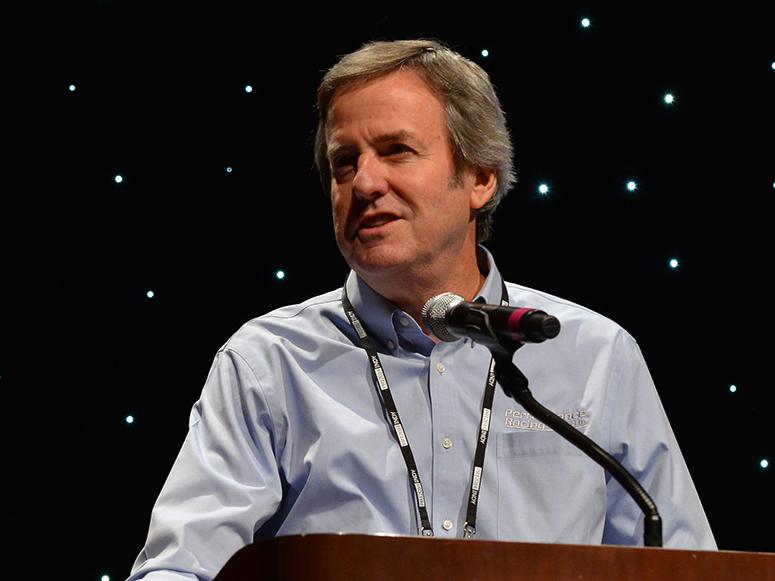
John Kilroy joined PRI Magazine as editor while the motorsports trade publication was still in its infancy in 1990. He grew the periodical into the brand it is today. He embraced his role as editor and, ultimately, vice president/general manager. He was the go-to source for advice and support from the entire PRI team due to his unassuming yet strong leadership. But his absolute passion for the racing industry, and those who are involved in it, is what drove him to share the latest trends, products, and news so racing industry members could count on PRI as their go-to source for all things motorsports business.
Read the full profile on John Kilroy that originally appeared in the March/April 2026 issue of PRI Magazine below:
John Kilroy didn't plan to be a journalist. He entered the University of California, Irvine, to pursue a law degree. As the oldest of six children, responsibility and leadership were values ingrained in him. His ultimate goal was to help people. But one evening in 1976, he chose a new path that involved social responsibility.
After meeting Debbie Springe at a summertime party, he asked her for another date to see a new movie, "All The President's Men." Kilroy was so inspired by the investigative skills of Bob Woodward and Carl Bernstein--the Washington Post reporters who broke the Watergate scandal that resulted in the resignation of former President Richard Nixon--that he decided in that very moment what would forever change his life. After the movie ended and the lights went up in the theater, the couple walked out. He turned to his future wife and said, "I want to be an investigative journalist."
He switched his college major to communications with a journalism concentration and transferred north 20 miles to California State University, Fullerton. During his last semester, he started working for the Fullerton Daily News Tribune, a local city newspaper that hired him full-time when he graduated. He wrote his own column, Brea Bystander, and soon covered Orange County legal news when he was based at the Superior Court of Orange County in Santa Ana.
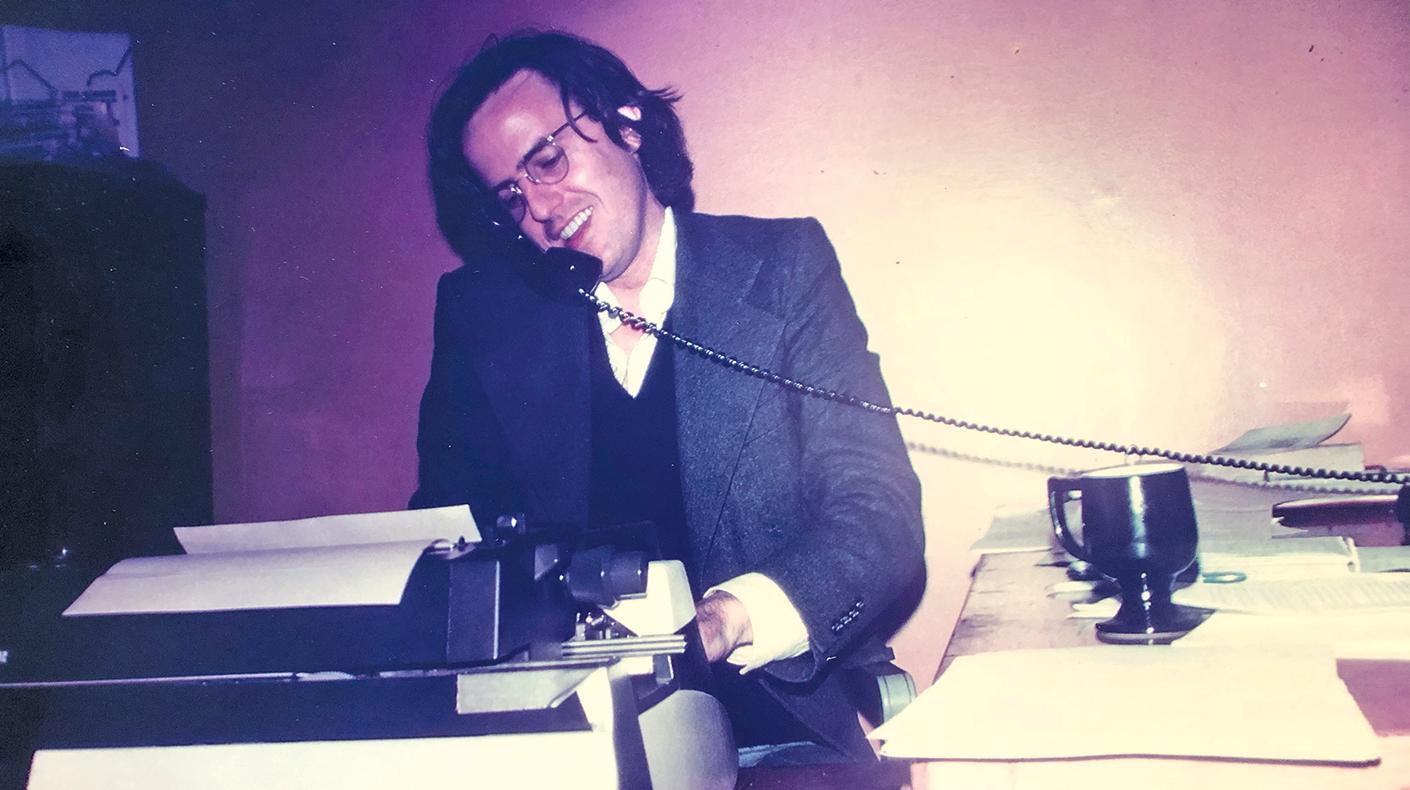
While he enjoyed the excitement of being the one to break a compelling news story, he soon met objections from upper management, who told him to follow any possible leads "on his own time." As a full-time reporter, his job was already demanding. The lack of support was defeating.
He also grew weary of the life of a journalist who worked in a large open office filled with the sound of a team of other bright-eyed rookies fueled by coffee and cigarettes as their fingers feverishly pounded on typewriters to meet impending daily deadlines. Kilroy's priorities changed when family life called: He and Debbie expanded their family to include sons Jake and Matthew, and daughter Caitlin. He decided to find a more stable 9-to-5 job that would allow him time to be at home with his family in the evenings.
He soon took on a position leading several mundane trade publications. While the stability was nice, he hadn't fulfilled that desire for more excitement in his work life. He informed publishing and trade show executive Steve Ready of his desire to move on. Ready introduced him to his good friend Steve Lewis, who had started a new magazine and trade show devoted to auto racing called Performance Racing Industry (PRI).
When Lewis met Kilroy, he said, "I immediately saw something special in John. He was so calm. In about 10 minutes, I was praying that John would see something here with PRI." Lewis's prayers were answered when Kilroy joined the PRI team as editor in May 1990.
Problem Solver
Kilroy quickly embraced the racing industry by attending as many events as he could. He wanted to learn about not only the race cars, but what powered the cars, and those who made or sold the parts that provided that power. His monthly column, called Industry Happenings, went beyond traditional industry news announcements or new product releases. He used his space in the magazine to share what intrigued him, or what he thought was newsworthy, or even fun. When determining monthly content for PRI readers, he would often ask himself, "What would Earl Gaerte think of this?" referring to the legendary short-track racing engine builder who passed away in 2011.
During the 1990s, PRI had a small staff, which required team members to be nimble and often take on a variety of roles. Although Kilroy's job title was "editor," he was always ready for any challenge that Lewis presented to him.
"John wasn't just writing the articles; he understood that we were a business. Anything that he could do to help the sales team or the marketing effort, he said, 'Call on me,' or he'd volunteer," claimed Lewis.
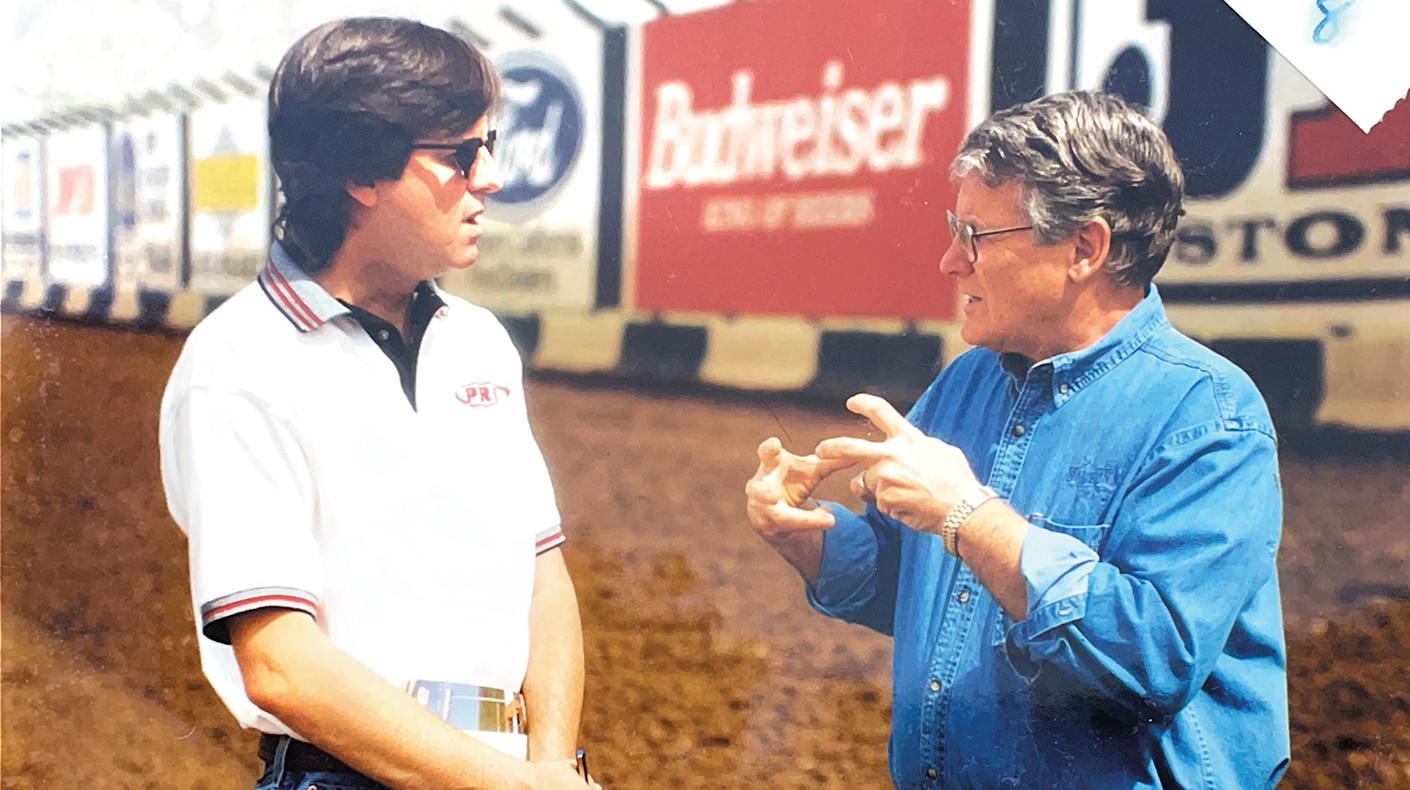
One example Lewis shared about Kilroy's commitment occurred in 1995. "I usually arrived at the office early, and one morning the phone rang. I picked it up, and it was Smokey Yunick."
Yunick wanted to talk about the fact that 1995 was the 40th anniversary of the Chevrolet small block engine's debut. He requested that his good friend Lewis use his PRI Show platform later that year to honor the engineers who developed the famed engine that changed not only the automotive world but auto racing specifically.
"We were only about nine months out from the Show happening in Columbus," said Lewis. "Smokey says, 'You've got to do something, and you've got to do it right.' And then he hangs up."
Soon after that fateful call, Kilroy happened to walk by Lewis's office. When Lewis presented him with Yunick's request, without hesitation, Kilroy told him, "We can do that."
Plans were quickly put in place to invite the remaining 18 elderly engineers to the event so that the racing industry could honor them and show their much-deserved appreciation. The centerpiece of the "40th Anniversary Celebration of the Introduction of the Chevrolet Small Block Engine" was going to be the very first Chevy small block that won a race. However, a potential snafu arose during setup for the trade show in December.
Lewis recalled, "Someone came running to me and said, 'Chevy called, and there's a strike. The dock workers won't put the engine in the truck. We won't have the engine.' Well, that's the one thing that Chevrolet said they would do, and now they aren't doing" to support the event put on solely by PRI. "How can we celebrate the small block without the small block?"
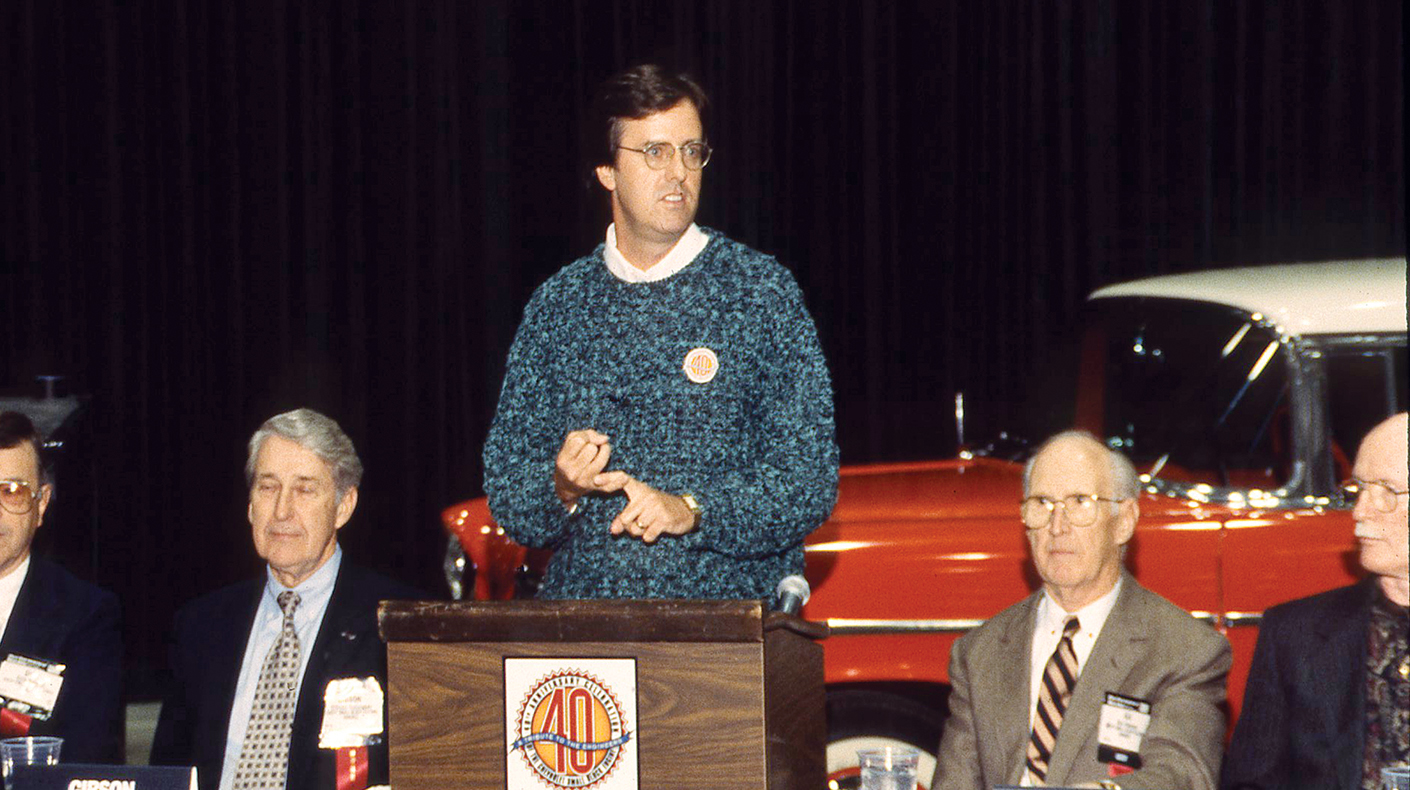
Debbie Springe-Kilroy had joined her husband for this memorable celebration. She witnessed his response when he was told that the event's main guest star would not be delivered. "I remember going to the hotel room with him. John made phone calls, and I'm listening to him in work mode. The way John approached anything--he didn't take 'no' for an answer. He was relentless. He was polite. He was professional. But I heard him on the phone, and he was going to make it happen."
He and Lewis asked Jimmy Pinkley, who helped out on Lewis's Nine Racing team at the time, if he could immediately drive from the Columbus Convention Center to where GM had the block ready to be picked up in Michigan. The next day, the engine was at the Convention Center.
Kilroy developed a close relationship with Yunick and collaborated with the famed engine builder to develop the Industry Roundtable, which was introduced at the PRI Show in 1997 and ran for 16 years. Yunick moderated the Roundtable for the first several years.
Lewis described the first meeting he had with Yunick and Kilroy as they worked out the logistics for the Industry Roundtable. "Smokey said, 'We need 70 people on the Roundtable.' My thought was, 'There's not a table big enough for 70 people to be panelists on the Industry Roundtable.' But with Smokey, once he gets his mind set on something…."
Lewis credited Kilroy for using his gentle yet persuasive manner to convince the fiery Yunick to moderate a more manageable panel of 10 to 15. The two-hour event was held on the day prior to the PRI Show's opening. It often drew crowds of up to 500 people who wanted to hear insights from racing industry leaders.
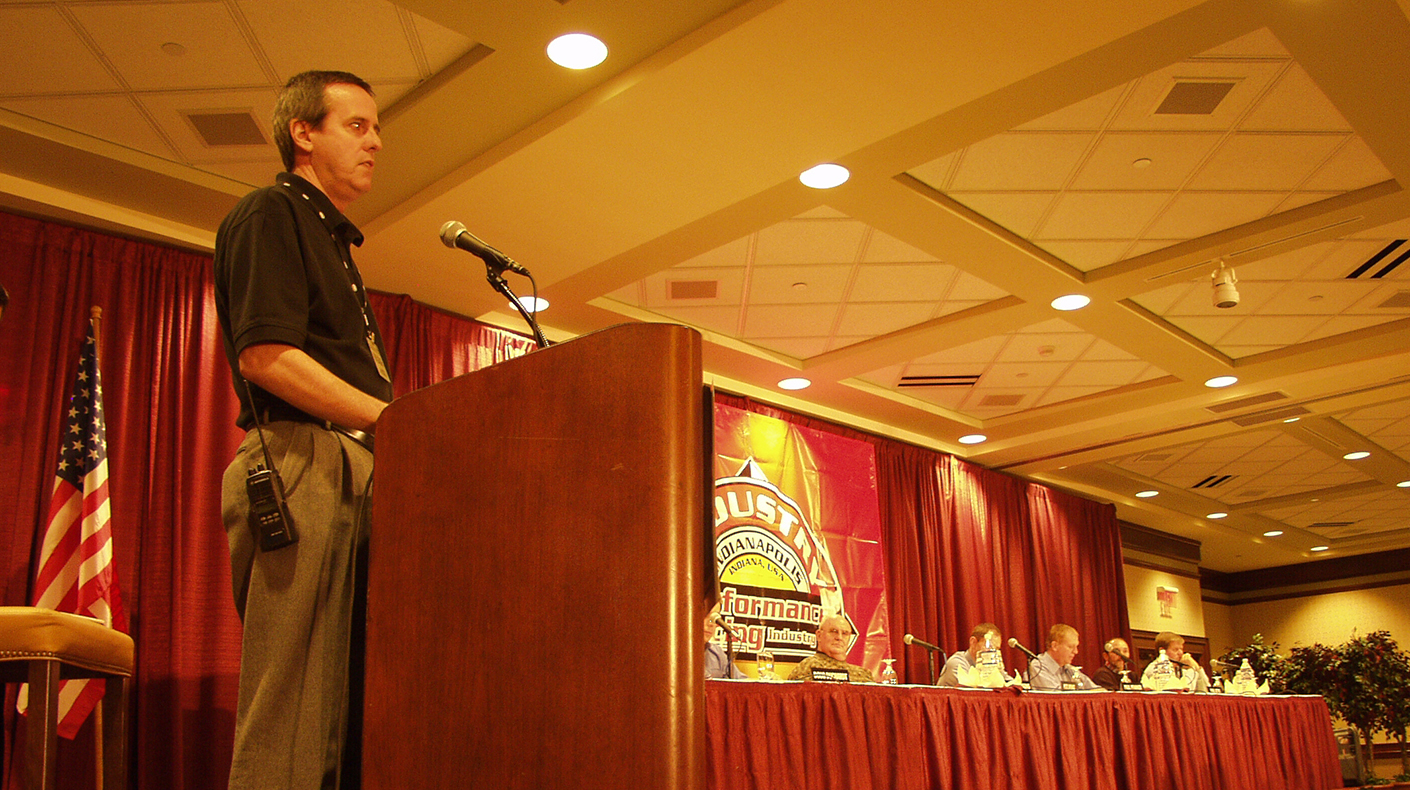
The PRI team often sought Kilroy's wisdom for matters beyond the Magazine and Show. "Around the company, people would go to John if they had a little problem," recalled Lewis. "He was solving problems a lot. He kept things going in the right direction."
In fact, when Lewis sold PRI to SEMA in 2012, Kilroy embraced a new role as vice president/general manager and welcomed the new challenge.
Kilroy's son Jake talked about his father's commitment to the success of PRI in the later years of his career: "When he went from being just the editor, but then stepping into the vice president role, he had a lot of new responsibilities that were much more administrative," he recalled. "Editorial came very naturally to him. He loved the hell out of editorial, especially for the racing industry. He was a fan. He talked about it with such thrilling excitement.
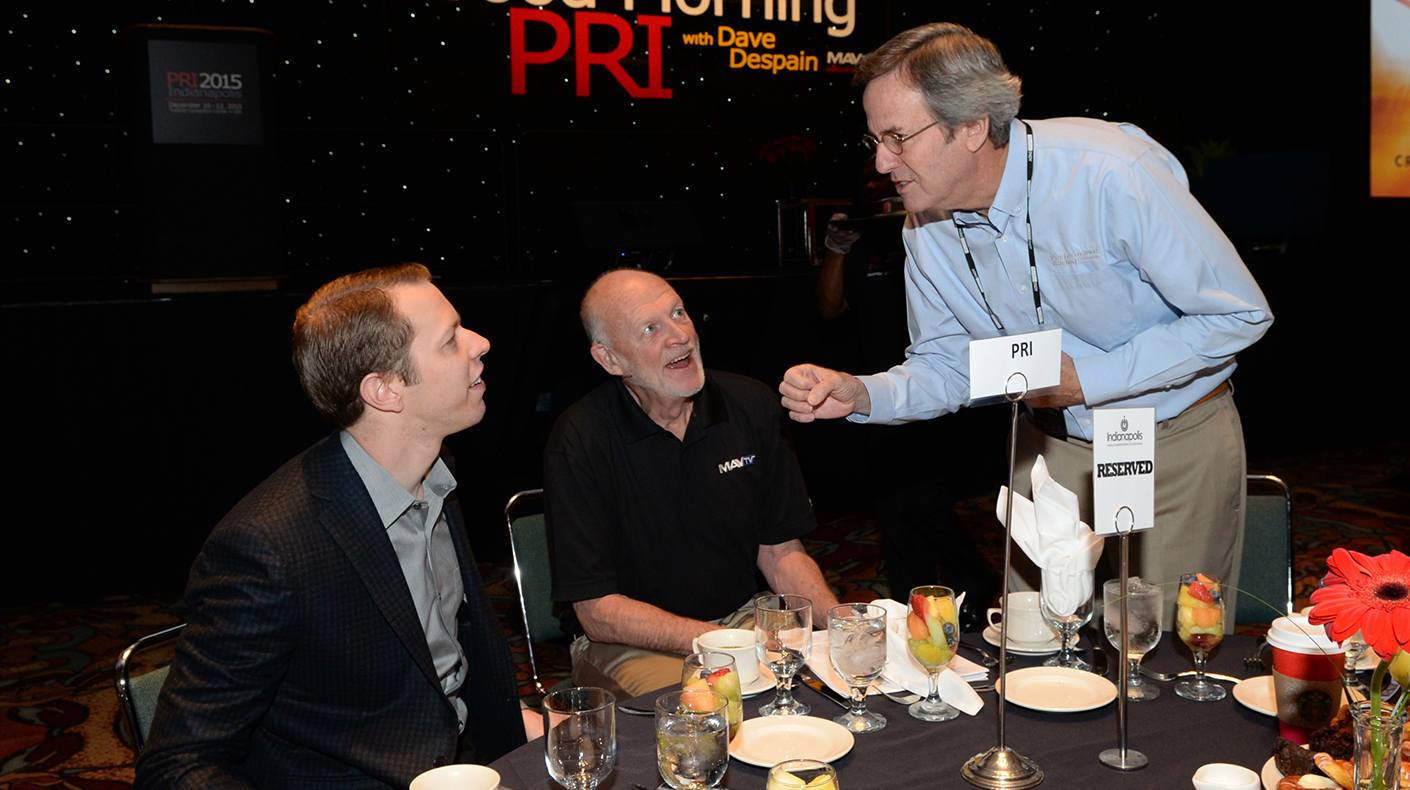
"Then, when he stepped into the VP role, he would get up well before dawn to go running in the dark so that he could be at his best, and deal with all these problems that maybe didn't come as naturally to him as editorial work. And he did it every day. I thought, 'Man, he just all of a sudden really loves running.' When I asked him about it, he told me, 'I hate it,'" Jake said, laughing. "And then after some time, he became a huge running fan.
"He did it to make sure that he could be what he believed PRI needed and deserved with him in the VP role. He was just getting up at five in the morning to go running for an hour, so by the time he got to his desk in Laguna Beach, he was 110%. That shows how dedicated he was. He was just running for a long time, hating every moment of it but making sure that he came into the office with total clarity."
"John was a special person. He was very bright and deeply passionate about the industry, but he was also a great listener," confirmed Karin Davidson, who joined the PRI team in 1995 and now serves as PRI Show director. "I believe that allowed him to be able to tell the story of what the racing industry needed to know monthly in PRI Magazine, while also shaping what needed to be showcased and highlighted each December at the PRI Show.
"Beyond his editor role, he helped guide the organization in the right direction, making sure we stayed aligned with the needs, values, and future of our industry. He consistently represented PRI with clarity and credibility, giving our customers a strong voice while keeping us focused on where the industry was headed and how we needed to evolve.
"I believe PRI Magazine and the PRI Show did so well under John's leadership because he was an expert at bringing the industry together," continued Davidson. "He understood how to highlight what mattered most, keep the community engaged, and ensure both the Magazine and the Show reflected the industry's needs, trends, and innovations year-round."
The Private Life of John Kilroy
While known in the racing industry for his editorial skills at PRI, his writing talents went far beyond a motorsports trade publication. He enjoyed a variety of writing projects.
"John was a poet," reported Springe-Kilroy, noting he had three self-published poetry books. "For a few years on Wednesday nights, our family would go to The Coffee House, and he would read his poetry. Shortly before the pandemic, Jake set up something at a local bookstore where Jake and John read poetry together."
"He just had a very soft and tender, very solid and capable way of existing," added Jake. "It was lovely to have access to that side of him: He could be a VP at the same time that he could come home and write poems, which is a very powerful duality to the guy."
He also shared how his father became a gourmet chef. Kilroy looked forward to cooking a feast for his family every year during the Super Bowl, serving a different course with each of the four quarters, and a special dessert after the football game ended. "It was pretty elegant for the Super Bowl," added Jake, laughing.
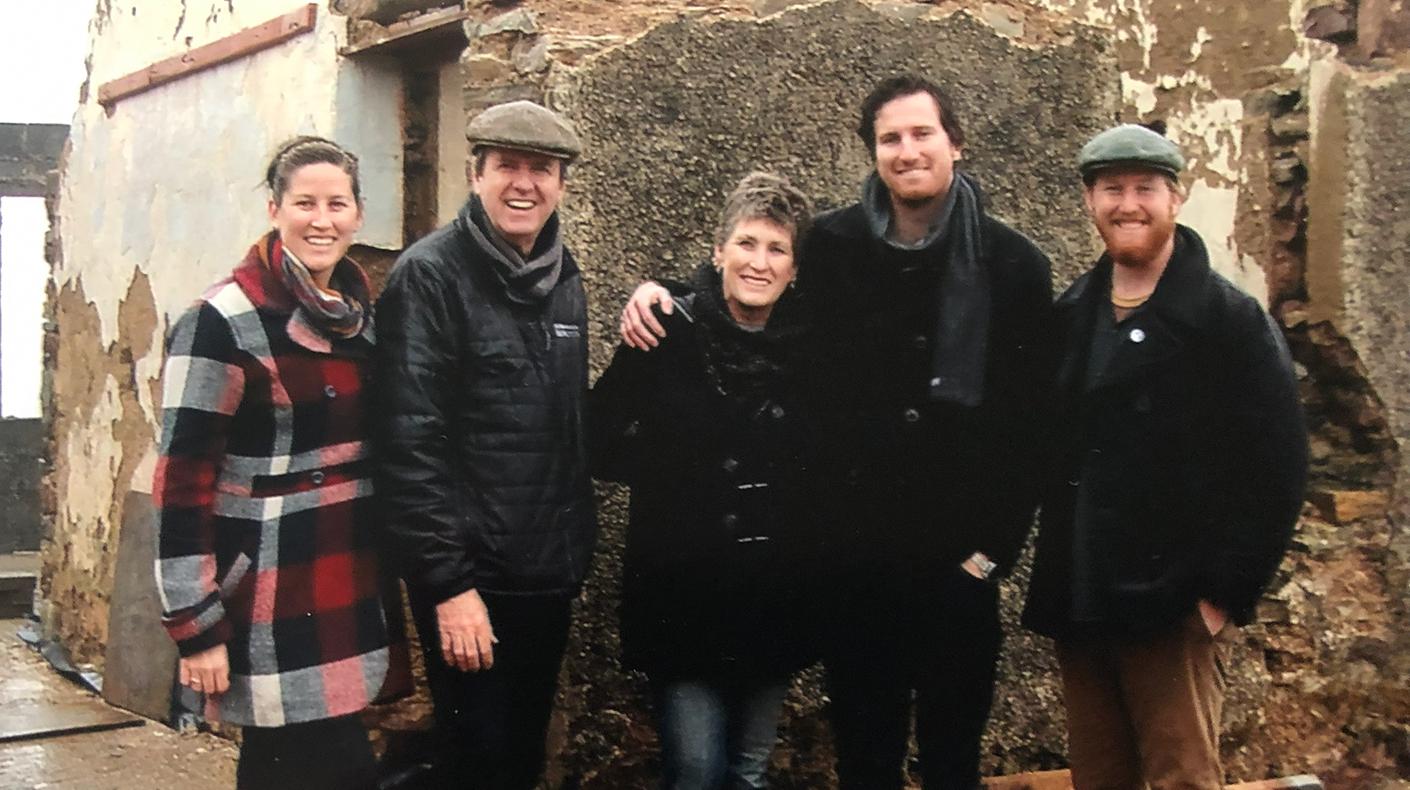
Kilroy used his time wisely during his 50-plus-mile daily commute to the PRI office in Laguna Beach. He would travel annually to Europe for the Autosport Show and other motorsports events. In the late 2000s, he and the company's international director were invited by the French Chamber of Commerce to attend a meeting in Paris next to the FIA's headquarters. Kilroy had learned French via an audiobook he listened to during his commute. He prepared his speech in French, had it verified by his coworker who spoke French, and they set out for Paris. What surprised everyone was that Kilroy actually memorized the five-minute speed in French. Afterward, other motorsports figureheads approached Kilroy and spoke to him in French. However, he apologized, admitting, "I don't speak French. I just memorized that."
All the different facets of John Kilroy don't surprise those closest to him.
"Steve could always depend on the entire team under John and know that everything could get done," said Jake. "There was never a doubt in his mind that whatever the task was, it would either be done or there'd be a conversation in the beginning of, if this isn't the best way to go about it, this would be the better move. So I think it was just a pretty unfailable, reliable machine with my dad in there."
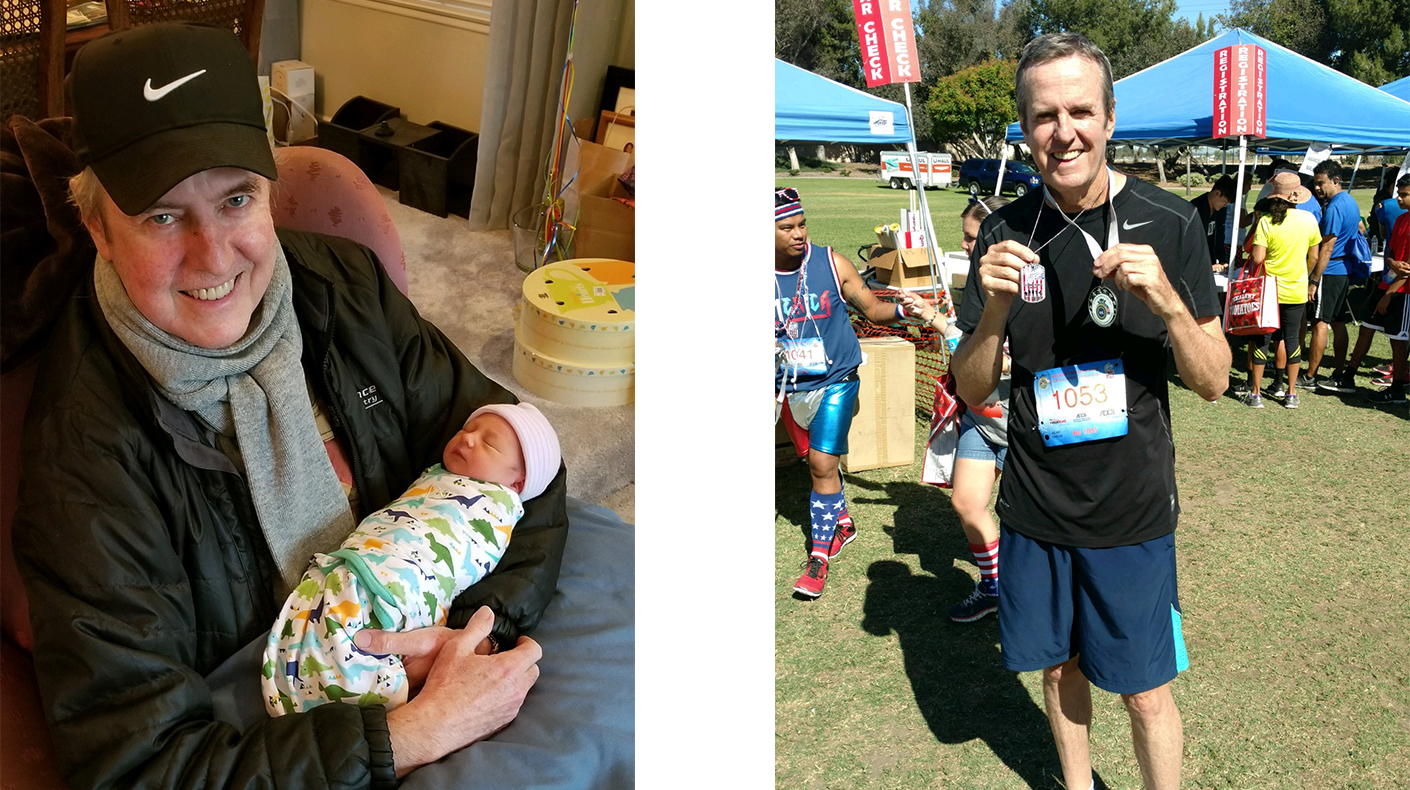
"Also, he brought fun to it," added daughter Caitlin Kilroy-McNany. "Just the stories we heard about my dad and the ideas he would have, especially when it came to the trade show and the ideas that he would bring to it. He got so enthusiastic about stuff," willing whatever it was to occur. "He made it happen."
"He was reliable, and he was always the go-to individual," confirmed son Matthew Kilroy. "He was the oldest in his family. He was the go-to there. He was always the go-to individual as a father. And it seems like that extended to when he was part of PRI, he was the go-to individual."
Kilroy retired from PRI in 2016 and passed away in 2021, after a years-long battle with cancer. When Kilroy's wife received the call that he had been inducted into the second PRI Hall of Fame class, she was "overwhelmed. I am very proud of John, of course, but overwhelmed that his name is still out there," said Springe-Kilroy. "He retired 10 years ago, and I know he contributed, but I'm floored that people remember him, that he had an impact, and I know he would be very proud of that. We're still overwhelmed by it all. It's really something that he's being honored."
To read the full article, plus hundreds of other articles like it, for free, sign up for a digital subscription to PRI Magazine on Zinio here.
Once you download the Zinio mobile app or are logged into Zinio on a desktop browser, you will gain immediate access to more than a year's worth of content, including all three PRI Hall of Fame profiles here and additional coverage in the March/April 2026 issue here.